Exploring the World in Hebrew
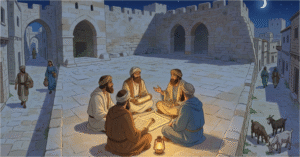
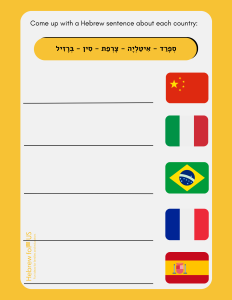
Encouraging children to have a discussion in Hebrew about countries they visited, or aspire to visit, can ignite their curiosity about different cultures and geography while advancing their language skills. By fostering open dialogue and curiosity in Hebrew, educators and parents can create an enriching learning environment where children feel empowered to share their experiences and dreams of exploring the world.
From Rituals to Geography
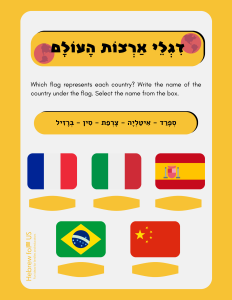
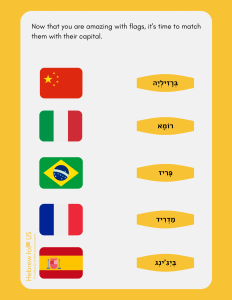
Utilizing familiar words to teach country names in Hebrew can create meaningful connections for children. For instance, the term “Artzot HaBrit” (United States) incorporates the word “Brit,” covenant, which children may recognize from the Jewish circumcision ceremony. By leveraging these connections, educators can enhance children’s understanding of language and culture while making the learning process engaging and relatable.
Discovering Languages
Teaching country names in Hebrew offers an opportunity to explore the linguistic diversity of the world. Many country names are associated with the names of languages, often with the addition of the suffix “-it.” For example, “Sefarad” (Spain) becomes “Sefaradit” in Hebrew, reflecting the Spanish language. By introducing these linguistic patterns, children gain a better understanding of Hebrew grammar and language patterns.