Why Do We Read Megilat Ruth on Shavuot?
Shavuot, the festival celebrating the giving of the Torah on Mount Sinai, is also a time when we read Megilat Ruth. The story of Ruth, with its themes of loyalty, kindness, and faith, beautifully aligns with the values celebrated during Shavuot. Ruth’s journey from a Moabite widow to a beloved member of the Jewish people parallels the acceptance of the Torah by the Israelites. Just as Ruth embraced Naomi’s people and faith, we renew our commitment to the Torah each Shavuot. Reading Megilat Ruth reminds us of the importance of kindness and the rewards of faithfulness.
.
Learning About the Different Parts of Tanakh
Teaching kids about the Book of Ruth offers a wonderful opportunity to delve into the structure of the Tanakh, the Hebrew Bible. The Tanakh is divided into three main sections: Torah (the Law), Nevi’im (the Prophets), and Ketuvim (the Writings). Megilat Ruth is one of the five Megilot (scrolls) included in the Ketuvim. By exploring Ruth’s story, children can gain a broader understanding of where this narrative fits within the larger context of Jewish sacred texts. This helps them appreciate the rich tapestry of literature that makes up the Tanakh and the unique role each part plays in Jewish tradition.
Using New Hebrew Vocabulary to Form Sentences
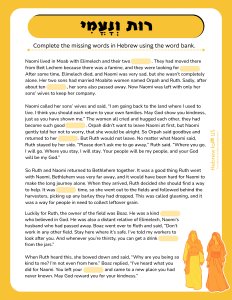
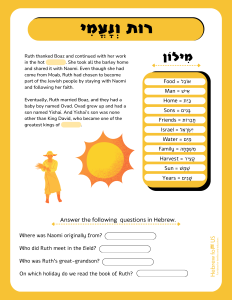
The worksheet attached is not just a tool for learning the story; it’s also a great way for kids to expand their Hebrew vocabulary. Encourage children to take the new words they’ve learned and use them to create their own sentences. This practice helps reinforce their understanding of the vocabulary and boosts their confidence in using Hebrew. Whether they’re describing Ruth’s journey, expressing her feelings, or retelling parts of the story, forming their own sentences helps solidify their language skills and deepens their ability to use Hebrew in everyday life.