Learning Sukkot Concepts with Hebrew and Gematria
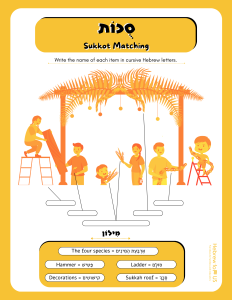
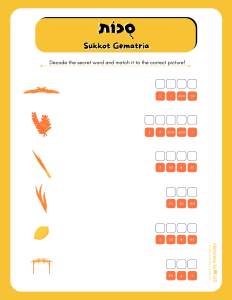
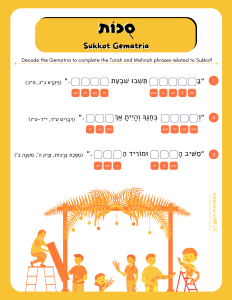
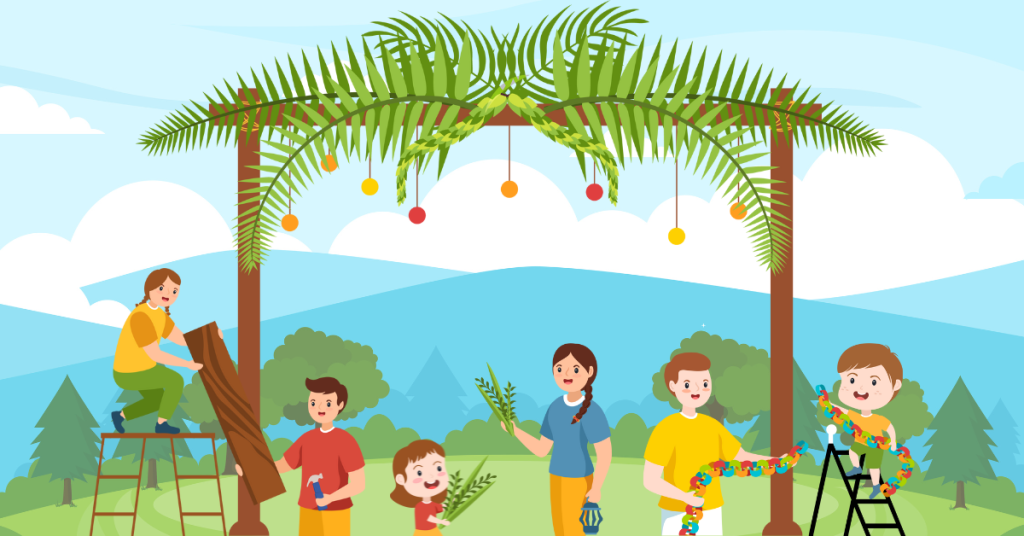
This Sukkot worksheet not only introduces kids to the basics of the holiday but also makes learning Hebrew fun by using the special code of Gematria. Through decoding, students will discover key Sukkot terms such as the four species – Lulav, Etrog, Hadas, and Aravah – along with important concepts like the Sechach (the leafy roof of the Sukkah). They’ll also learn practical words for building a Sukkah, like Patish (hammer) and Sulam (ladder). By blending Gematria with these essential Hebrew words, the worksheet helps students engage with the holiday in a playful, interactive way while strengthening their connection to both Sukkot and the Hebrew language.
The Length of the Holiday: Israel vs. Diaspora
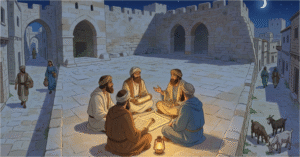
One fascinating aspect of Sukkot is the difference in its observance between Israel and the diaspora. In Israel, Sukkot lasts for seven days, culminating in Shemini Atzeret and Simchat Torah being celebrated on the same day. However, in the diaspora, Sukkot is celebrated for eight days, leading to Shmini Atzeret and Simchat Torah being observed as separate days. Historically, Jews in the diaspora faced challenges in accurately determining the new moon (Rosh Chodesh), which signaled the beginning of a new month in the Jewish calendar. Communication with the Jewish court in Israel, which declared the start of the new month based on moon sightings, was slow and unreliable. To ensure that they celebrated holidays on the correct day, Jewish communities outside of Israel added an extra day to each festival. This practice continues today, which is why Sukkot, along with other holidays, lasts longer in the diaspora. Understanding this tradition helps students explore how geography and historical circumstances have shaped Jewish observances over time.
The Prayer for Rain on Shemini Atzeret
As Sukkot comes to a close with Shemini Atzeret, we begin a special prayer in the Amidah, asking for rain: “Mashiv HaRuach U’Morid HaGeshem” – “He causes the wind to blow and the rain to fall.” This prayer marks a shift in focus, as the Jewish community prays for rain to nourish the earth during the coming winter months. Rain is vital for agriculture and the well-being of the land, particularly in Israel, and this prayer connects us to the natural cycles of the seasons. Teaching kids about this prayer can deepen their understanding of how Jewish holidays reflect the rhythms of nature and remind them of the importance of caring for the environment.