Sigd is the unique holiday of the Beta Israel Ethiopian Jewish community. By incorporating the worksheets below into your lesson plans, you can help students engage with this holiday’s celebration while strengthening their Hebrew vocabulary and cultural literacy.
Origin of the Holiday
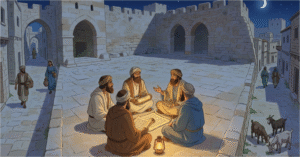
Observed annually on the 29th of Cheshvan, exactly fifty days after Yom Kippur, Sigd traces its roots back to ancient biblical history. According to tradition, the holiday is inspired by the moment of national assembly and covenant renewal described in the books of Ezra and Nehemiah, when the Jewish exiles returned to Zion. For centuries, while living in the Diaspora, the Jews of Ethiopia preserved this day as an expression of unyielding yearning for Jerusalem, community unity, and the renewal of their covenant with God.
How It’s Celebrated Today
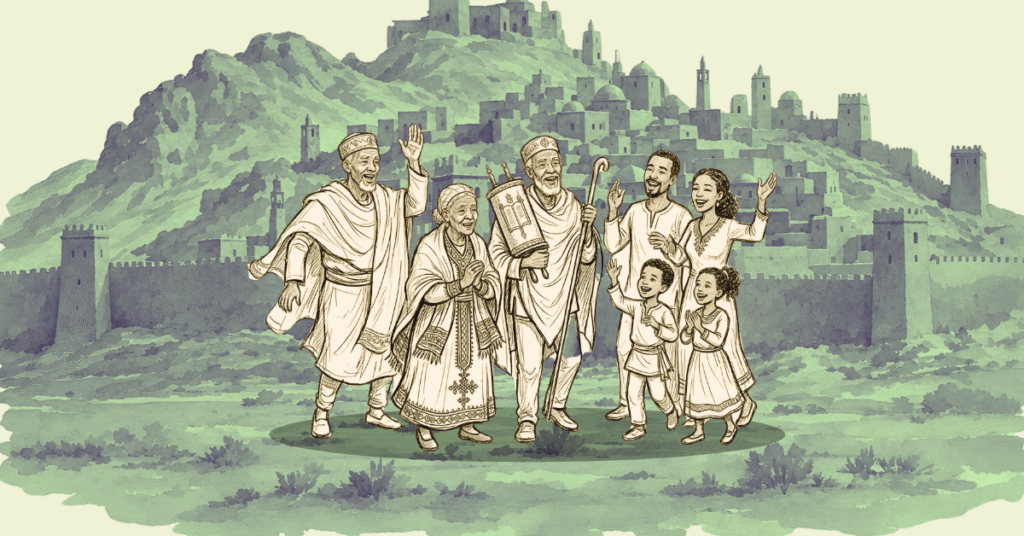
Traditionally marked by a morning of fasting, introspection, and personal prayer, the second half of Sigd transforms into a joyful celebration featuring feasting, music, and community gathering. Since the mass Aliyah of the Beta Israel community, the central modern gathering takes place in Jerusalem, drawing crowds to the Western Wall and the Armon Hanatziv promenade.
The Orit Book: A Gateway for Advanced Learners
A brilliant way to challenge your more advanced students is by introducing them to the Orit, the sacred canon of the Beta Israel community, written in the ancient Ge’ez language. Unlike standard Torah scrolls, the traditional Orit includes not only the five books of Moses (Genesis, Exodus, Leviticus, Numbers, and Deuteronomy), but also the historical and narrative books of Joshua, Judges, and Ruth. During Sigd, community leaders (Kessim) traditionally carry and read from these sacred texts in colorful processions. Researching together the unique contents of the Orit provides a springboard for older or more advanced learners to explore textual traditions, comparative canon studies, and the rich literary heritage of Ethiopian Jewry.