Why Teach Gematria?
Teaching Gematria to kids is not just about numbers, it’s a tool that unlocks a deeper understanding of Hebrew texts and Jewish traditions. Whether navigating through a Siddur, finding a specific Pasuk in the Chumash, or calculating important dates in the Jewish calendar, Gematria helps students familiarize themselves with Hebrew letters and their numerical equivalents. The High Holidays are perfect moments to introduce this concept, as we begin our Jewish year cycle and can use these skills to follow the calendar throughout the year.
Playful Learning with Familiar Elements
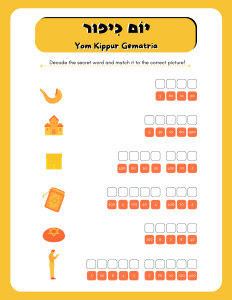
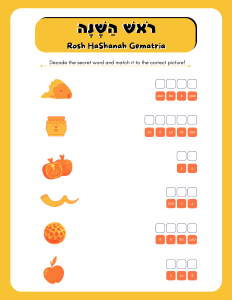
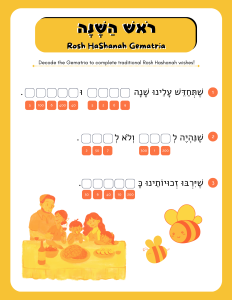
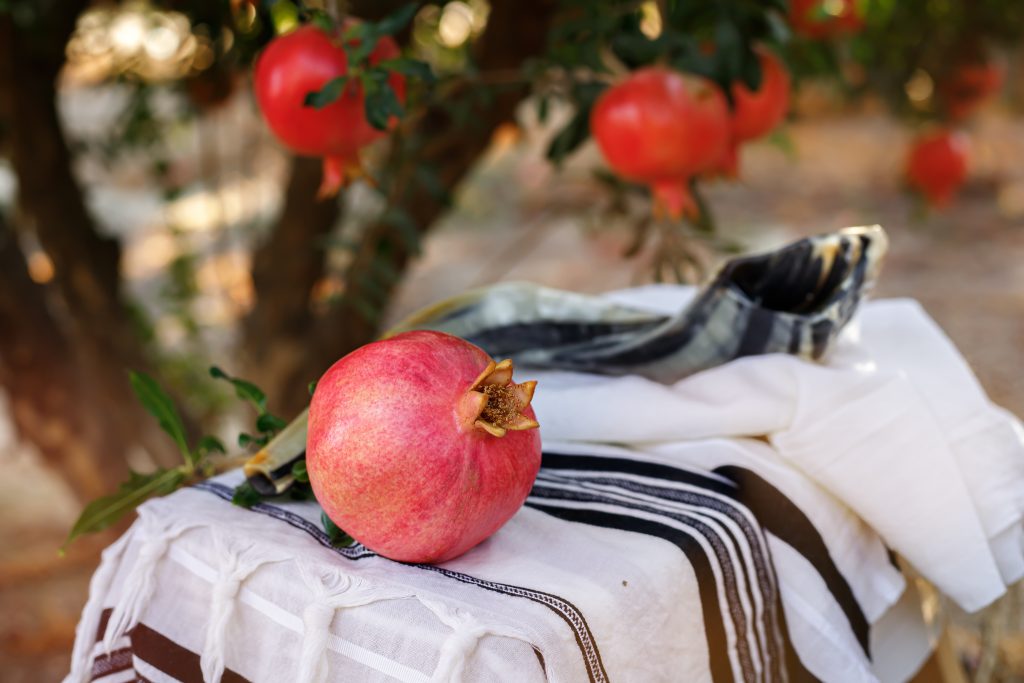
The key to engaging kids in learning Gematria is to make it playful and relevant. By incorporating familiar items and phrases from Rosh Hashanah and Yom Kippur, such as the Shofar, Challah, and Kippah, children can connect with the material in a personal and memorable way. These symbolic elements not only represent significant aspects of the holidays but also provide a fun way to decode numbers. For instance, discovering that the word “Shofar” adds up to a certain value can make learning feel like a treasure hunt rather than a lesson. Using words and objects they already know helps students grasp the concept of Gematria while celebrating the essence of the season. Out of words? Try the student’s Hebrew name, and their family members’ names.
Identifying Hebrew Birthdays and Bar/Bat Mitzvah Dates
Gematria lessons also offer a great opportunity to dive into each student’s personal Jewish milestones. After introducing Gematria, you can work together to find their Hebrew birthday, a fun and meaningful calculation that links them to the Jewish calendar. This can also lead to discovering the date of their Bat or Bar Mitzvah and the corresponding Torah reading. It’s a chance to make the lesson highly personal, connecting students to their own Jewish identity while giving them a practical application of Gematria that extends beyond the classroom.