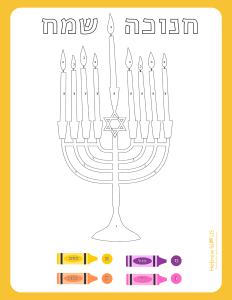
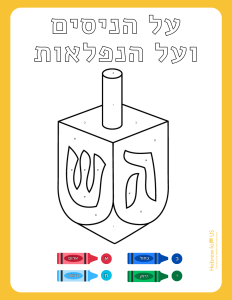
Hanukkah is a wonderful time to introduce young children to Hebrew letters, culture, and language through playful, engaging activities. The “Color-by-the-Hebrew-Letter” worksheets featuring a Menorah (or Hanukkiah) and a Dreidel (or Sevivon) offer a perfect blend of fun and learning for children ages 3-6. Let’s explore the importance of starting early, the rich linguistic heritage behind these symbols, and creative ways to deepen the experience with Hebrew colors.
Starting Young with Hebrew Letters
Children are like sponges, absorbing new information with ease and excitement. Early exposure to Hebrew letters not only builds foundational literacy skills but also fosters a sense of connection to Jewish culture and identity. Activities like “Color-by-the-Hebrew-Letter” allow kids to associate the shape of a letter with its sound, making the learning process interactive and memorable. This foundational step can pave the way for future fluency in Hebrew, whether for reading prayers, understanding Jewish texts, or participating in modern Hebrew conversations.
Menorah or Hanukiah? Dreidel or Sevivon?
Hanukkah traditions bring with them a beautiful interplay of languages, primarily Hebrew and Yiddish. These worksheets provide a chance to discuss the origins of the terms Menorah and Hanukkah as well as Dreidel and Sevivon.
- Menorah vs. Hanukiah:
The word Menorah is Hebrew and refers to any type of lampstand, including the seven-branched candelabra used in the ancient Temple in Jerusalem. The term Hanukkiah was coined in modern Hebrew to specifically describe the nine-branched candelabra used for Hanukkah. While many people use these terms interchangeably, it’s a great opportunity to explain the distinction and to introduce young learners to the richness of Hebrew vocabulary. - Dreidel vs. Sevivon:
The term Dreidel comes from the Yiddish word dreyen, meaning “to spin.” In Hebrew, the spinning top is called Sevivon (from saviv, meaning “around”). In Ashkenazi Jewish communities, Dreidel is more common, while Sevivon is the preferred term in Hebrew-speaking contexts, such as Israel. You can share this cultural insight with kids, enriching their understanding of Jewish diversity.
Learning Hebrew Colors
Coloring activities also provide a wonderful chance to teach Hebrew color names. As children fill in their worksheets, parents and teachers can introduce the Hebrew words for the colors they’re using. For example:
- Red – אָדוֹם (Adom)
- Blue – כָּחוֹל (Kachol)
- Yellow – צָהוֹב (Tzahov)
- Green – יָרוֹק (Yarok)
Take it a step further by playing a Hebrew color game. Say a color in Hebrew, and ask children to find an object in the room that matches that color. They can bring the object to you or touch it while saying the Hebrew word aloud. This activity reinforces their vocabulary and keeps them active and engaged.