Why is it Important to Know the Tree’s Age?
Tu Bishvat, a significant observance in the Jewish calendar, stands out as one of the four heads of the year. Rooted in ancient agricultural practices and the biblical directive regarding the fruits of the land, Tu Bishvat has evolved beyond a mere date on the calendar. Originally employed for calculating the age of trees in adherence to the concept of Orla – the prohibition of consuming fruit from a tree within its first three years – the holiday has transformed into a celebration of nature’s renewal and the commencement of a new agricultural cycle. Understanding the age of a tree, particularly in the context of Orla, adds a layer of significance to Tu Bishvat, emphasizing the interconnectedness between human stewardship and the natural world.
Familiarizing Kids with Talmudic Resources: The Tale of Honi the Circle Maker
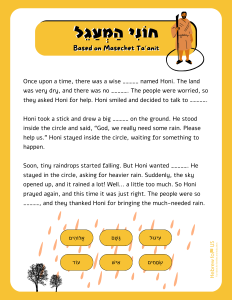
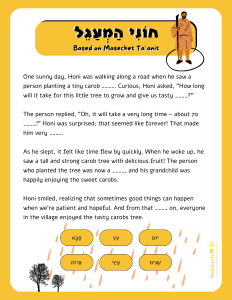
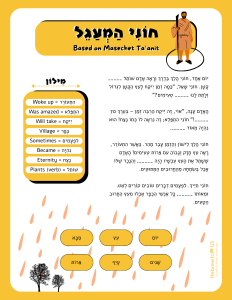
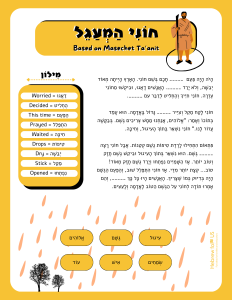
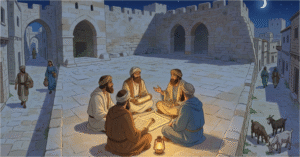
In an effort to instill the rich traditions of Tu Bishvat, it is essential to introduce children to Talmudic resources related to the holiday. One captivating story that captures the spirit of the celebration is that of Honi the Circle Maker. According to Talmudic legend, Honi was a sage who, through his deep connection with God and nature, demonstrated the significance of patience and perseverance. His famous encounter with a man planting a carob tree, symbolizing the commitment to future generations, serves as a timeless lesson about the enduring bond between individuals, the land, and the cycles of life.
Incorporating Hebrew Words into the Learning Experience
To enhance the learning experience and foster a deeper connection with Jewish heritage, it is crucial to incorporate Hebrew words into the exploration of Tu Bishvat. By introducing terms such as “Tu Bishvat” itself, “Tu” being the numerical value of the Hebrew letters Tet (9) and Vav (6), representing the date on which the holiday occurs, children can develop a linguistic and cultural understanding. Understanding the Hebrew names of trees, fruits, and specific blessings associated with Tu Bishvat not only enriches the educational aspect but also reinforces the linguistic ties that have united generations in the celebration of this meaningful holiday.