Teaching the story of Jonah and the Whale offers a meaningful way to connect students to the themes of Yom Kippur while strengthening their Hebrew language skills. Whether your students are beginners or at an intermediate level, this worksheet provides an adaptable and interactive learning experience for both levels.
Exploring the Structure of the Tanakh
Before diving into the story, this is a great opportunity to review the structure of the Tanakh with your students. The Tanakh consists of the Torah, Nevi’im (Prophets), and Ketuvim (Writings). Remind your students that not all famous stories come from the Torah – Jonah’s story is actually found in Nevi’im, in the Prophets section. This can help them understand that there’s more to Jewish learning than just the Five Books of Moses and broaden their knowledge of biblical texts.
Worksheet Breakdown: Two Levels of Learning
Beginner Version:
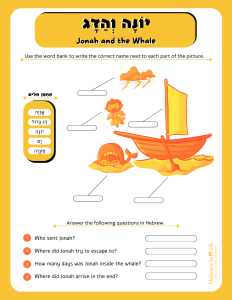
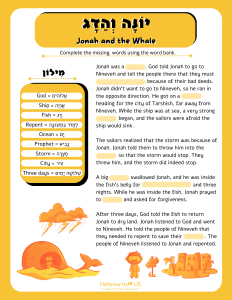
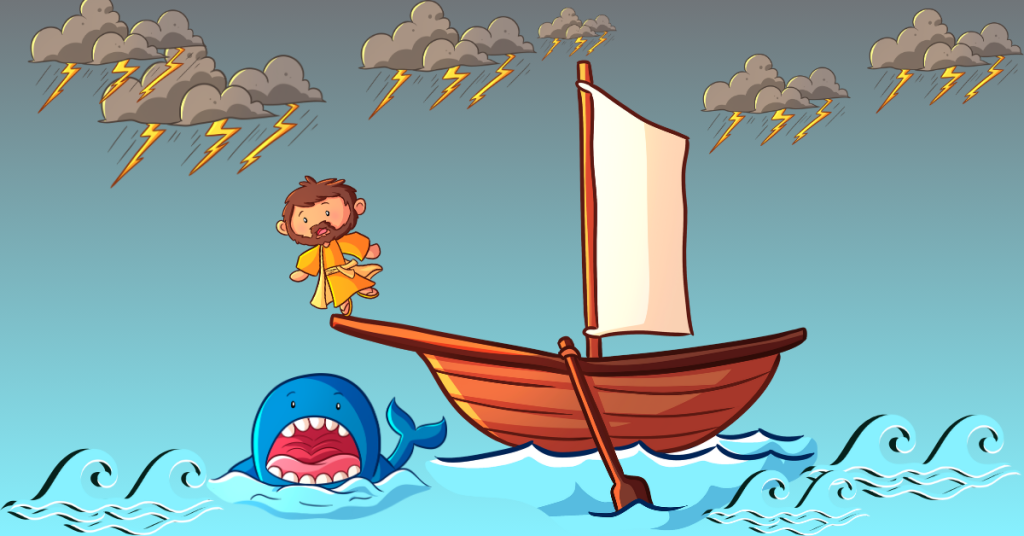
In the beginner version, the story of Jonah is provided in English, but the students use a word bank of Hebrew words to fill in the blanks within the story. This version allows students to connect to the story while practicing basic Hebrew words related to Jonah and his journey. Additionally, on the second page, they will match Hebrew words to specific parts of the picture (whale, ship, ocean, storm), helping reinforce their understanding of new vocabulary in a fun and visual way. For the final activity, students answer English questions using Hebrew words.
Intermediate Version:
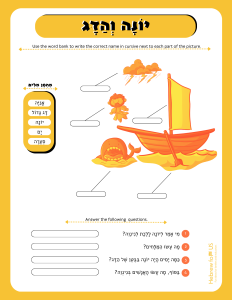
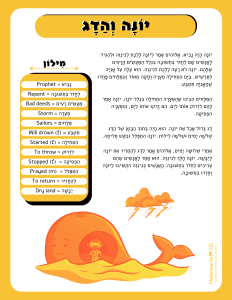
In the intermediate version, the story is presented entirely in Hebrew. A vocabulary list is provided to help students with new words, ensuring they can still engage with the text even as their Hebrew reading skills are challenged. Like the beginner version, students will also match Hebrew words to the parts of the picture, but they are asked to answer Hebrew comprehension questions, encouraging them to apply the vocabulary they’ve learned and engage with the text more deeply.
Spark a Class Discussion: Why Jonah on Yom Kippur?
Once the students have completed the worksheet, it’s an ideal time to spark a class discussion. Ask your students, “Why do we read the story of Jonah on Yom Kippur?” Encourage them to think about the themes of repentance, forgiveness, and second chances, which are at the heart of both Jonah’s story and Yom Kippur. This discussion can lead to deeper reflections on the meaning of the holiday and how we, like the people of Nineveh, are given an opportunity to change and make better choices.
Bringing the Story to Life: Class Play
After reading and discussing the story, consider having your students act it out. A short, simple play can be a fun way to bring the lesson to life. Encourage students to use as much Hebrew as possible while performing, reinforcing their language skills. You can also assign each character a Hebrew word they must use during the play. For example, Jonah could use the word “נָבִיא” (navi, prophet), and the sailor could say “סְעָרָה” (sa’arah, storm) at key moments.