Purim is one of the most exciting holidays in the Jewish calendar, filled with storytelling, costumes, and celebrations. Teaching the story of Megillat Esther to students can be both educational and fun when using interactive activities. The Purim Story Hebrew Worksheets are designed to help students engage with the text while improving their Hebrew vocabulary and comprehension skills. Below is a detailed lesson plan on how educators can effectively use these worksheets in the classroom.
.
Lesson Plan Breakdown:
1. Introduction to Purim (10-15 minutes)
Begin by asking students what they know about Purim. Prompt discussion with questions like:
- Who are the main characters in the Purim story?
- What happens in the story of Esther?
- What are some Purim traditions you observe in your family?
Write key names and terms on the board: אחשורוש (Ahasuerus), אסתר (Esther), מרדכי (Mordechai), ושתי (Vashti), המן (Haman), מגילה (Megillah), משתה (Feast), מתנות לאביונים (Gifts to the poor).
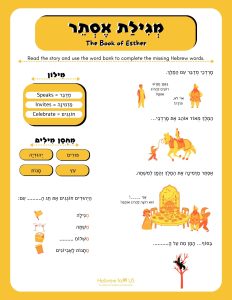
2. Guided Worksheet Activity (20-25 minutes)
- Distribute the first worksheet. Read through the sentences together and model how to use the word bank to fill in the blanks.
- Assign students to small groups or partners to complete the worksheets collaboratively.
- Encourage students to read the sentences aloud in Hebrew once they fill in the blanks, reinforcing pronunciation and comprehension.
- Distribute the second worksheet and follow a similar process, allowing for more independent work.
3. Discussion & Review (10-15 minutes)
- Go over the answers together as a class.
- Ask students to retell the Purim story using the words they learned.
- Optional: Act out short scenes using the words from the worksheets.
4. Extension Activities (Optional)
- Art Integration: Have students draw or create a comic strip based on a scene from the Purim story.
- Writing Prompt: Ask students to write a short paragraph in Hebrew using at least three words from the worksheets.
- Game: Play a matching game where students pair Hebrew words with their English meanings.
.
.