The Benefits of Teaching Hebrew Songs to Children
Teaching songs to children can be a powerful tool for language learning and cultural connection. Music has a unique ability to engage young learners and enhance their language acquisition process. Songs often incorporate repetitive patterns, catchy melodies, and memorable lyrics, which aid in vocabulary retention and pronunciation practice. Additionally, songs provide context for cultural elements, such as traditions, values, and historical events, allowing children to develop a deeper understanding of the language’s cultural context. Learning canonical Hebrew songs offers Hebrew learners the opportunity to immerse themselves in the rich tapestry of Israeli culture, from traditional folk tunes to contemporary pop hits. By studying Hebrew songs, learners not only expand their language skills but also gain insights into Israeli society, history, and heritage. Moreover, singing Hebrew songs fosters a sense of connection and belonging to the Hebrew-speaking world, inspiring learners to engage more deeply with the language and its cultural expressions.

Who was Sarah Levy-Tanai?
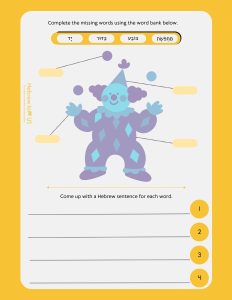
Sarah Levy-Tanai (1910–2005) was an Israeli choreographer, composer, and songwriter known for her contributions to Israeli music and children’s songs. Born in Israel to parents of Yemenite origin who immigrated at the end of the 19th century, Levy-Tanai grew up immersed in the rich cultural tapestry of the region. She is celebrated as the founder and artistic director of the Inbal Dance Theater company for 40 years, where she made significant contributions to the Israeli dance scene. In addition to her role in the arts, Levy-Tanai composed numerous beloved songs for children, such as “Leitzan Katan Nehmad” (Nice Little Clown), which continue to resonate with generations of Israeli children, leaving an enduring legacy in Israeli music.

Interactive Language Reinforcement
One of the best ways to review material with kids is through a scrambled sentence game, as it offers an interactive and engaging way to reinforce the Hebrew language. The game provides an opportunity for children to test their knowledge and comprehension while encouraging active participation and retention of information. If it’s a 1:1 lesson and not a group setting, an online game is a great option. The dynamic nature of online games allows educators to customize questions and activities to target specific language skills, whether it’s vocabulary recall, grammar practice, or cultural knowledge. Through repeated exposure to Hebrew language concepts in a fun and stimulating environment, scrambled sentences games play a valuable role in solidifying learning outcomes and building confidence in young Hebrew learners.